



Verida helps manufacturers share information about a product's materials, origin and lifecycle in a way that buyers, auditors and authorities can independently check, using EBSI as a shared trust layer.


A SHARED FOUNDATION
Register dated fingerprints on shared European infrastructure.
Only fingerprints and limited metadata are anchored on EBSI.
Make proofs verifiable across organisations and borders.
Other applications can check anchored evidence through EBSI's public API.
Continue managing your records and customer experience.
Your original files, workflows and customer relationships remain within your environment.
Providers of digital identity, credentials and verification services.
Platforms managing records, permissions and authoritative information.
Solutions enabling data exchange and management across organisations.
Solutions tracking products, events and evidence across value chains.
Digital services connecting public authorities, businesses and citizens.
Companies connecting technologies, platforms and existing IT systems.

How it works
capabilities
Use EBSI to establish dated proofs of files or register their origin and history. Both capabilities can be integrated into existing applications.

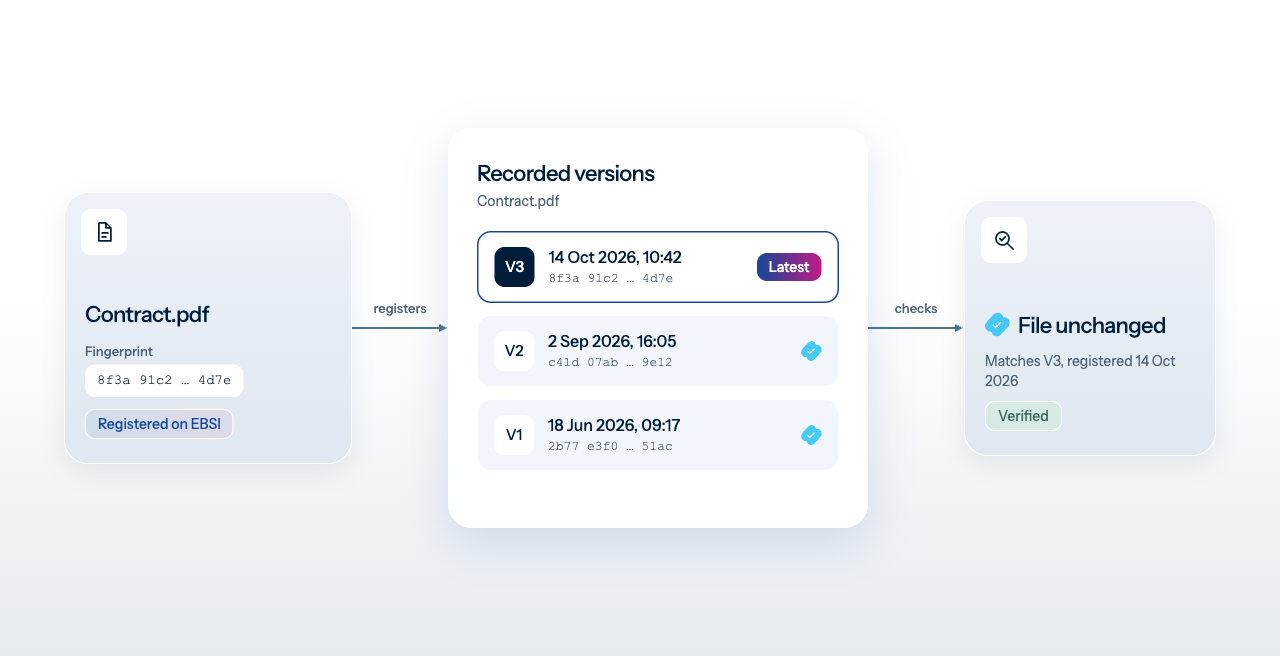
Anchor a file's hash and record its versions history.
Register dated fingerprints to verify that a file is unchanged and identify its recorded versions.
Example: contracts, protocols, reports and certificates.

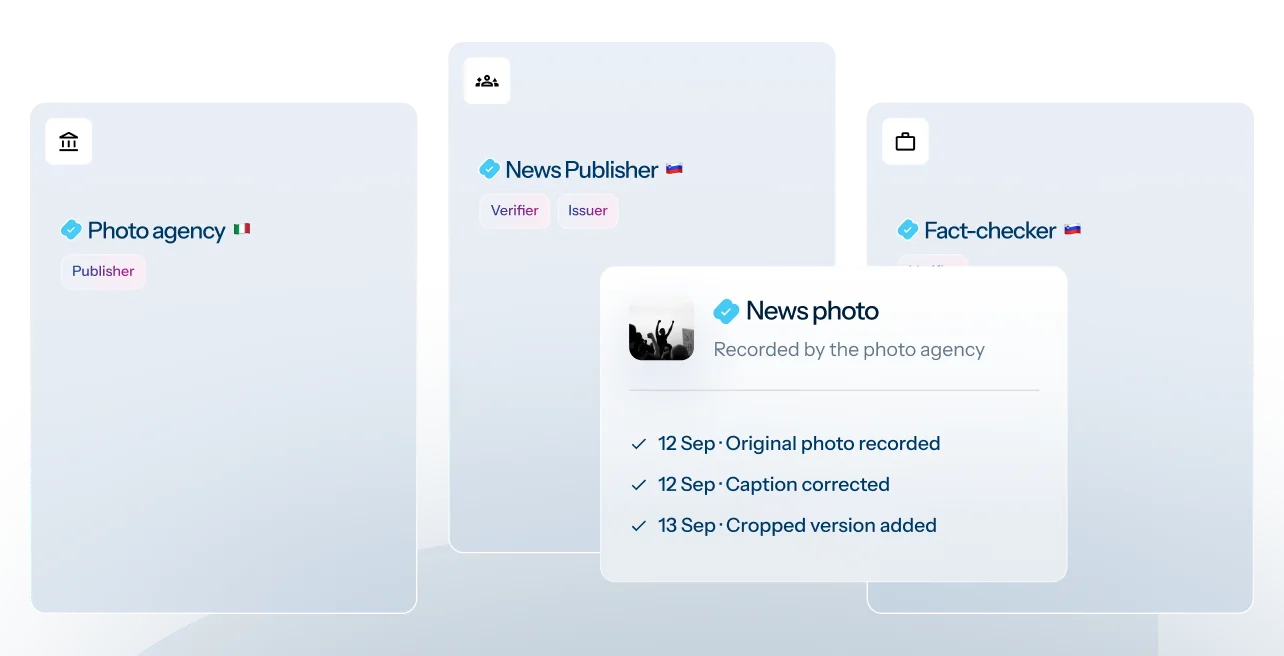
Anchor a document's hash, trace its events and verify its creator
Register records under an authorised creator's verified EBSI identity and record subsequent steps in their history.
Example: official publications and datasets.
WHY EBSI
Operated through a network of European nodes, endorsed by Member States.
Open standards enable verification across systems, organisations and borders.
Connect existing applications to EBSI services through APIs and developer tools.

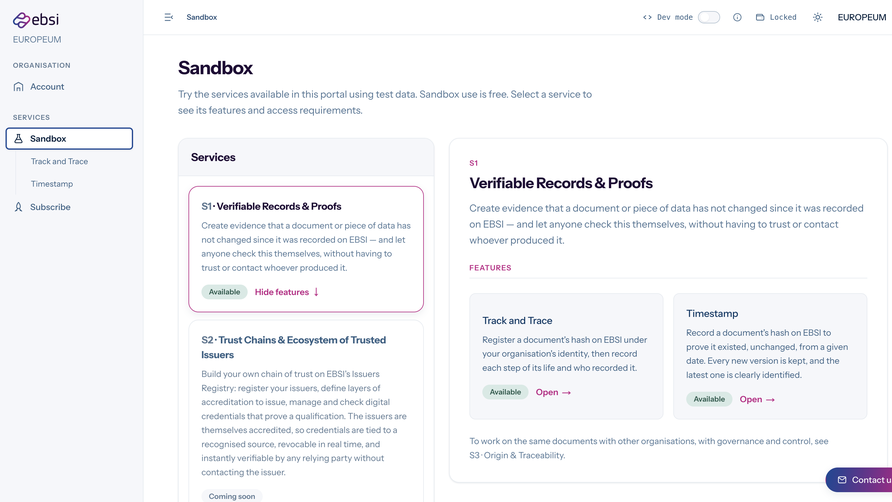
EBSI sandbox
Explore Timestamp and Track and Trace in the EBSI sandbox. Access the Portal to begin testing.

Verida helps manufacturers share information about a product's materials, origin and lifecycle in a way that buyers, auditors and authorities can independently check, using EBSI as a shared trust layer.

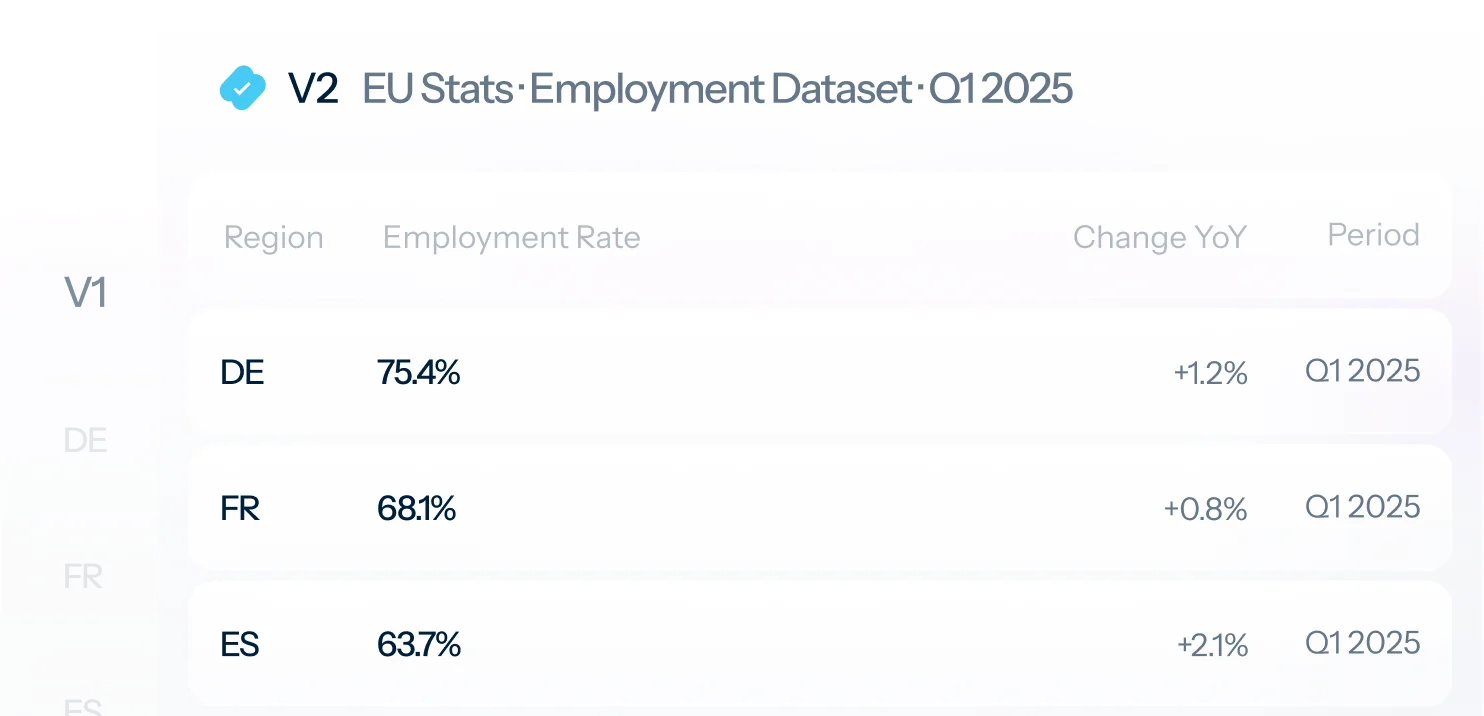
Eurostat is exploring how EBSI can help achieve the independent authentication of published datasets — so researchers, journalists, auditors, and policy analysts can verify the figures they rely on.

The Decentralised EU Securities Service (DEUSS) is a financial infrastructure that connects strategic SMEs directly with investors throughout the European Union. The project explores how EBSI can support digital bond issuance for SMEs by making issuer, investor, and bond information easier to verify across borders.
A cryptographic hash and the metadata required by the selected capability, which can include a record identifier, a timestamp, an issuer identifier and version events. Not the record itself.
Timestamp proves a document existed, unchanged, at a given time. Track & Trace proves an item’s history and who published each step.
Yes. EBSI can be integrated alongside existing platform when you need evidence anchored through a common European trust layer. The appropriate architecture depends on your current infrastructure and verification requirements.
Timestamp proves a point in time: a document or dataset existed at a given date and has not been altered since. Track & Trace proves a sequence of events: it records each document and lifecycle step linked to an item. Every entry is signed by its author, so others can trust both what happened and who reported it.