Developer Hub
Open source. Run it locally, test conformance, connect when ready.
Explore Developer Hub


Assisting European citizens in the acceptance and recognition of certifications for vocational education and training across Europe.









Together, they are pioneering the future of vocational education and training in Europe with EBSI by facilitating the issuance, acceptance, and recognition of all types of vocational educational and training certifications across borders.
Lorem ipsum dolor sit amet, consectetur adipiscing elit, sed do eiusmod tempor incididunt ut labore et dolore magna aliqua. Ut enim ad minim veniam, quis nostrud exercitation ullamco laboris nisi ut aliquip ex ea commodo consequat. Duis aute irure dolor in reprehenderit in voluptate velit esse cillum dolore eu fugiat nulla pariatur.
Block quote
Ordered list
Unordered list
Bold text
Emphasis
Superscript
Subscript


Vocational education and training (VET) systems in Europe are not centrally governed but rather rely on a well-developed network of VET stakeholders. The social partners that govern these networks are employers and trade unions, structured as chambers, committees, and councils.
However, the way these social partners communicate and exchange information in Europe still faces challenges at administrative and regulatory levels, especially with the issuance, acceptance, and verification of paper or digital vocational education credentials. This is because vocational education qualifications in Europe lack administrative processes and regulatory implementation - including the use of standardised data models. This gap affects all levels of the process, resulting in a high number of steps, prolonged timeframes, shared and ambiguous responsibilities, or a reliance on intermediary third parties.


The project is leveraging the power of the European Blockchain Services Infrastructure (EBSI), to develop a seamless cross-border vocational education experience.
EBSI allows them to design, build, and operate the next generation of decentralised services. The objective is to promote intra-European migration, ideally gaining a better handle on the over- or under-supply of skilled workers at both individual and societal levels by:
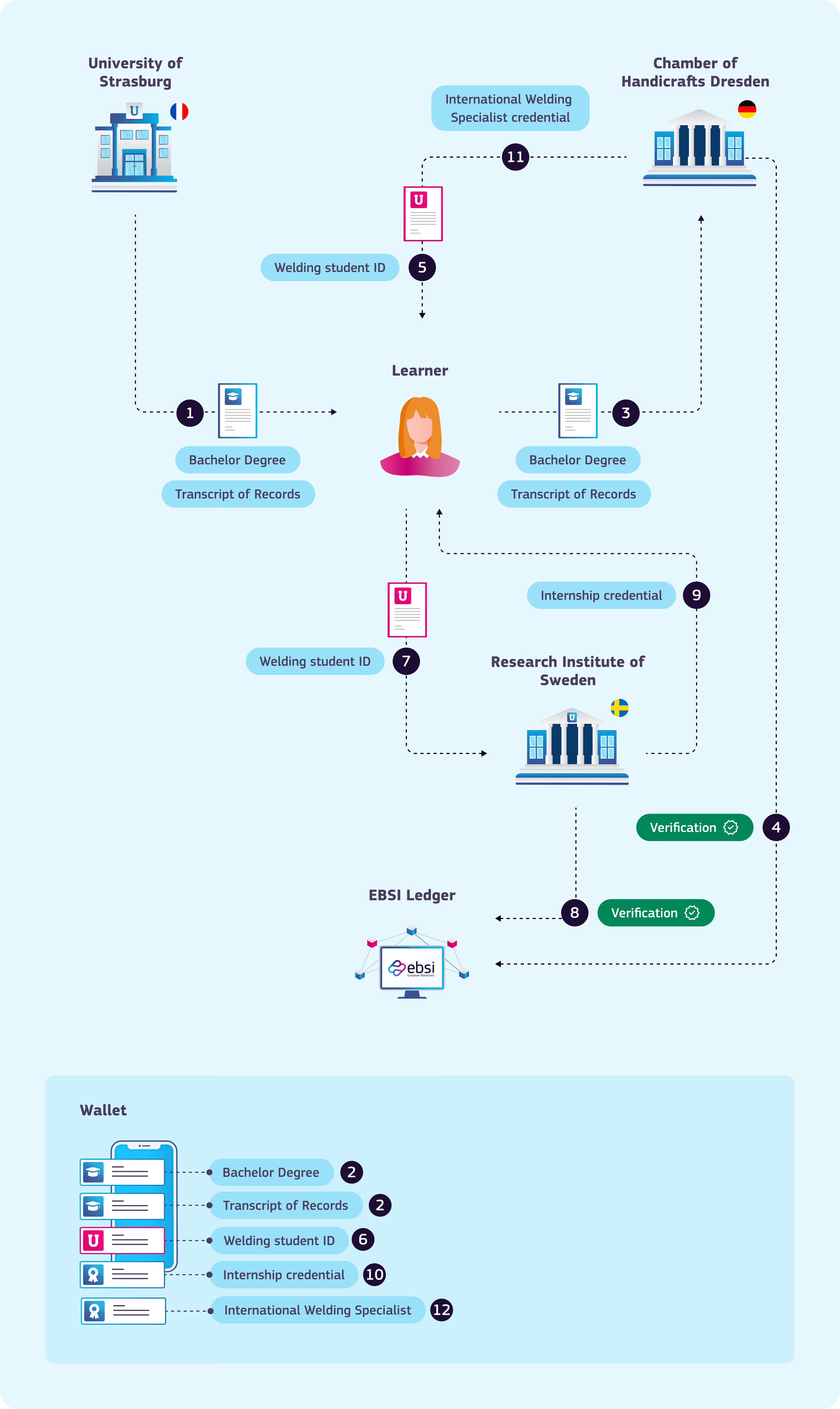
Meet Maria, a global vocational learner.
text
p
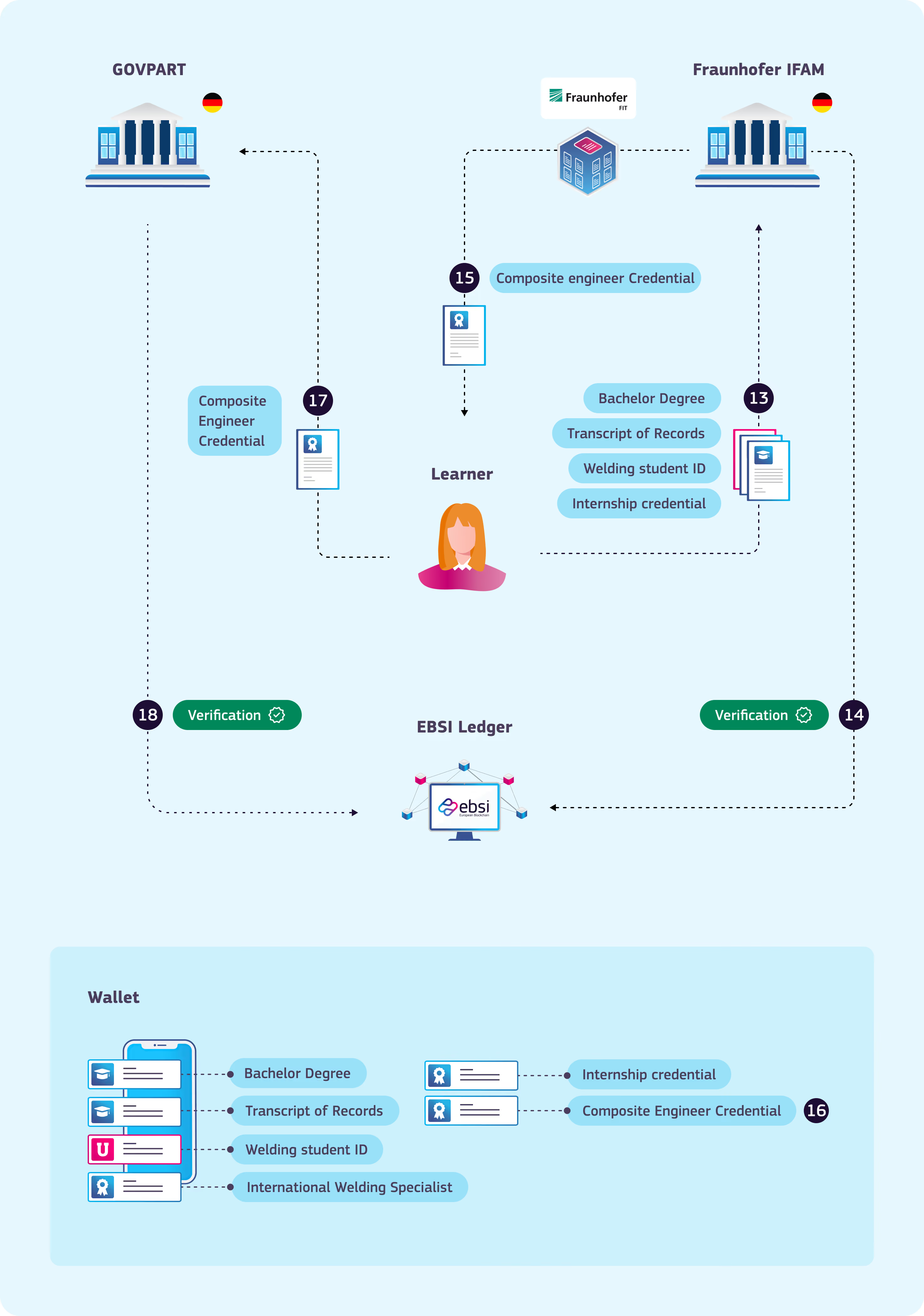
With her new welding credentials, Maria realises that doesn't know enough about working with brittle materials (including plastics). This makes her want to accompany her welding skills with composite materials skills.
text
p
EBSI is open source under the European Public Licence. Evaluate the full stack locally, and connect to the live network when ready.
Lorem ipsum dolor sit amet, consectetur adipiscing elit, sed do eiusmod tempor incididunt ut labore et dolore magna aliqua. Ut enim ad minim veniam, quis nostrud exercitation ullamco laboris nisi ut aliquip ex ea commodo consequat. Duis aute irure dolor in reprehenderit in voluptate velit esse cillum dolore eu fugiat nulla pariatur.
Block quote
Ordered list
Unordered list
Bold text
Emphasis
Superscript
Subscript