Developer Hub
Open source. Run it locally, test conformance, connect when ready.
Explore Developer Hub


Helping European national and private actors increase the reliability of scientific measurement and calibration processes across industries and borders.


Together, their vision is to leverage blockchain technology to improve the verification processes in metrology, including the calibration and inspection of measuring instruments, the issuance and verification of credentials for laboratories and legal entities, and the facilitation of cross-border recognition of these credentials.
Lorem ipsum dolor sit amet, consectetur adipiscing elit, sed do eiusmod tempor incididunt ut labore et dolore magna aliqua. Ut enim ad minim veniam, quis nostrud exercitation ullamco laboris nisi ut aliquip ex ea commodo consequat. Duis aute irure dolor in reprehenderit in voluptate velit esse cillum dolore eu fugiat nulla pariatur.
Block quote
Ordered list
Unordered list
Bold text
Emphasis
Superscript
Subscript


Traditional certification and accreditation processes can be lengthy, requiring manual verification and paperwork. Manual processes also entail higher costs for both public bodies and private entities, from administrative overhead to human errors. Without a tamper-proof system, there's potential for data manipulation or fraud in certification and accreditation processes. Stakeholders do not have an immediate view of the status of their certificate/accreditation, which can lead to delays or mistrust. Even if terminologies are translated, their meaning and implications could vary subtly between countries. For machine-readable systems, semantic inconsistencies can create serious bottlenecks and information resides in isolated databases, making it hard to consolidate and validate data across different countries.
The central challenge of this project lies in effectively addressing these inefficiencies and complications by integrating the European Blockchain Service Infrastructure (EBSI) with the existing metrology frameworks across EU member states. This task demands a nuanced approach to ensure seamless technological integration and interoperability of diverse national systems, adherence to EU regulations and standardization, and maintaining robust data privacy and security in line with GDPR.
A significant part of the challenge also includes fostering widespread stakeholder adoption amidst potential resistance to change, ensuring reliable cross-border recognition of metrological data, and navigating the complex legal and regulatory landscape of the EU. Additionally, securing adequate resources and funding for the development, implementation, and sustained operation of the system is crucial.


What has been achieved is a practical application of EBSI in specific areas of metrology, such as instrument calibration, issuance of metrological credentials, and their cross-border recognition.
By utilizing EBSI's capabilities, the project streamlines processes for calibration and inspection of measuring instruments, the issuance and verification of credentials for laboratories and legal entities, and the facilitation of cross-border recognition of these credentials, to reduce bureaucratic overhead, and increase transparency and trust across member states.
Given that EU and national metrology laws are generally aligned, Random Red Ltd. has the opportunity to create a EU-wide standard, eliminating semantic and procedural barriers. The project could enable easier and more efficient cross-border recognitions for measuring instruments, addressing even non-jurisdictional barriers like language and semantics. Given that accreditation bodies, metrology institutes, laboratories and measuring instrument owners (companies, factories, laboratories, etc.) are already potential end-users, Random Red could serve as a blueprint for public-private collaborations in other sectors.
EBSI allows Random Red to design, build and operate the next generation of decentralised measurement and calibration services, with the objective to:
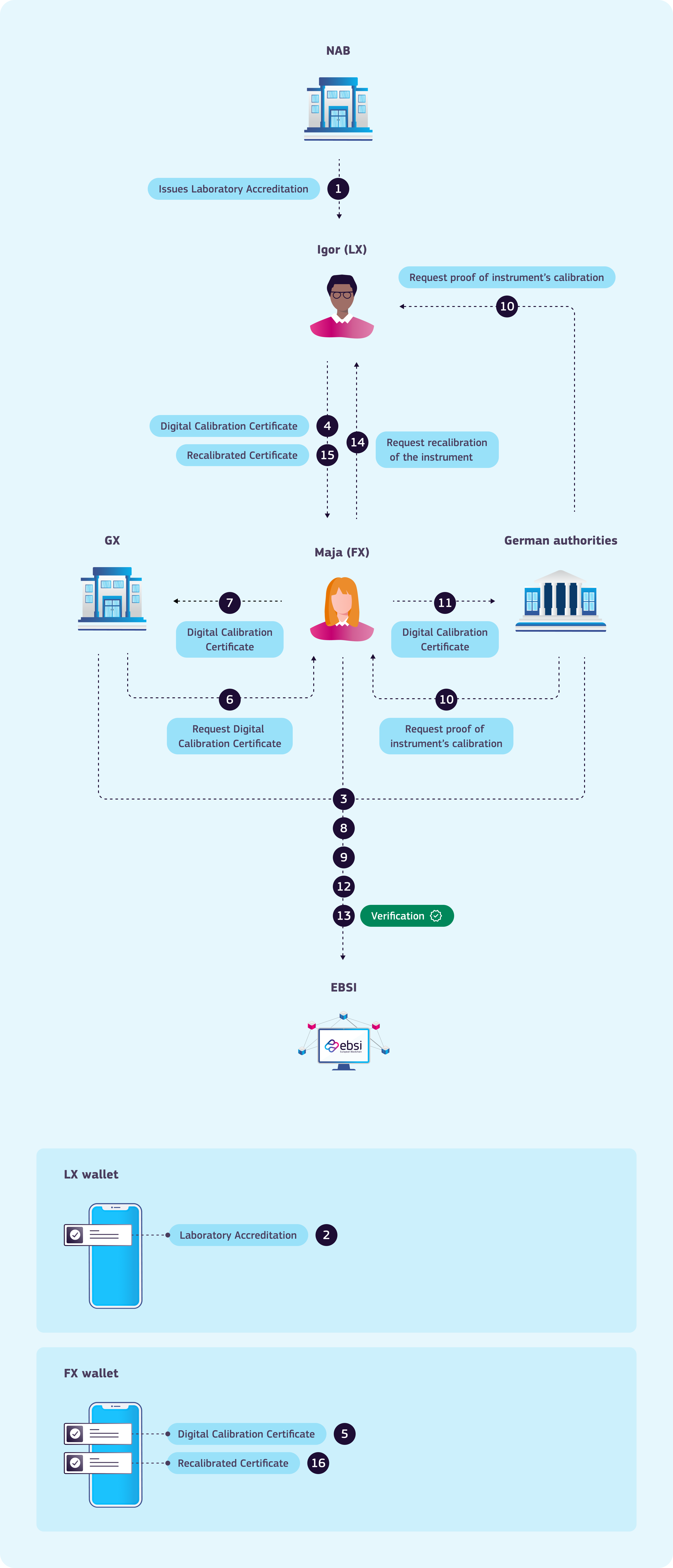
text
p
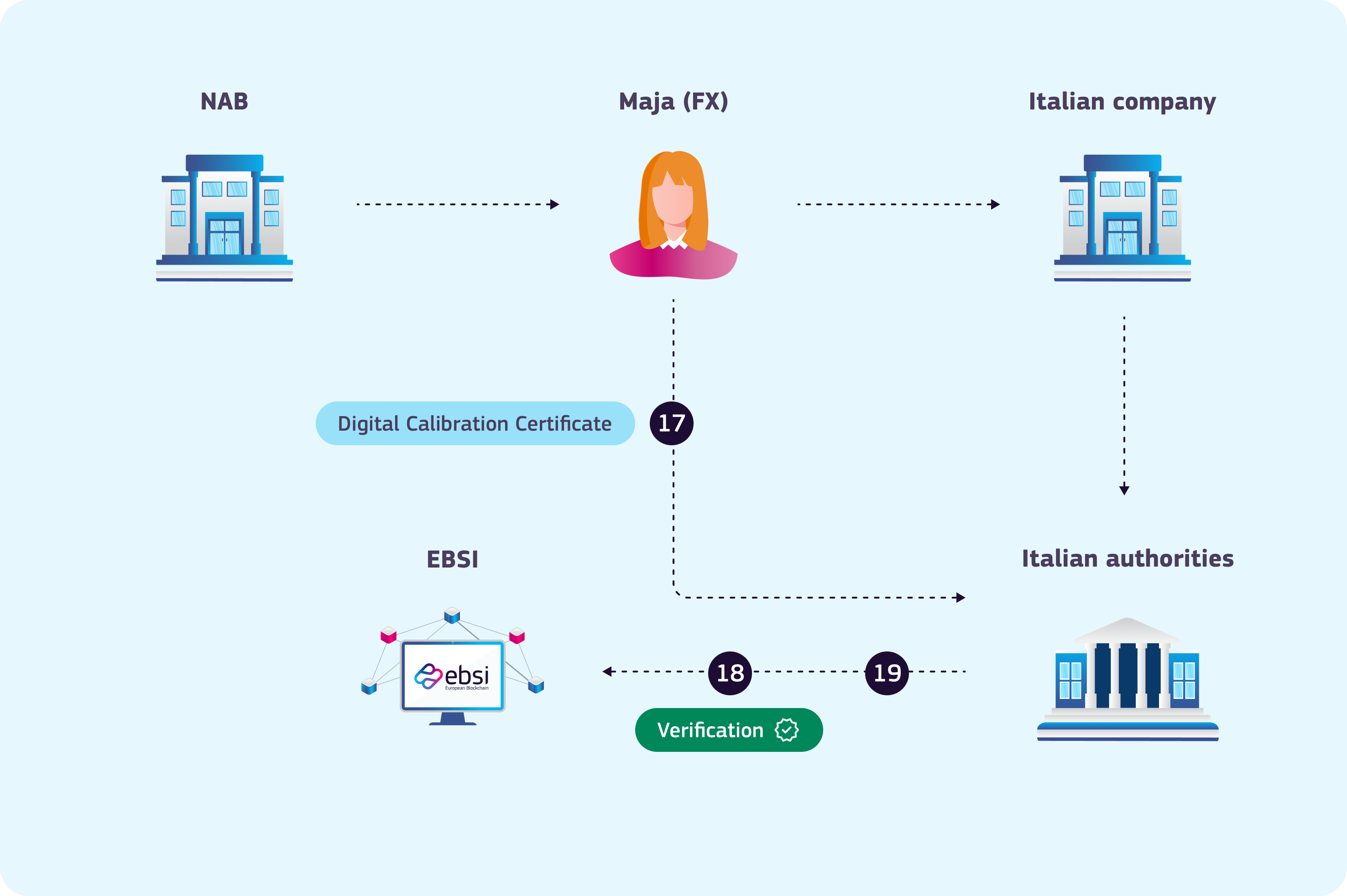
When the instrument is later loaned, for example, to an Italian company, the process repeats with the Italian authorities, i.e. Maja 17 presents the Digital Calibration Certificate to the Italian authorities, which can then 18 verify the credential against the EBSI ledger. Additionally, LX's laboratory accreditation credentials authenticity is 19 verified against EBSI ledger. The calibration data becomes a trusted part of the instrument's history, facilitating its use in different EU countries.
EBSI is open source under the European Public Licence. Evaluate the full stack locally, and connect to the live network when ready.
Lorem ipsum dolor sit amet, consectetur adipiscing elit, sed do eiusmod tempor incididunt ut labore et dolore magna aliqua. Ut enim ad minim veniam, quis nostrud exercitation ullamco laboris nisi ut aliquip ex ea commodo consequat. Duis aute irure dolor in reprehenderit in voluptate velit esse cillum dolore eu fugiat nulla pariatur.
Block quote
Ordered list
Unordered list
Bold text
Emphasis
Superscript
Subscript