Developer Hub
Open source. Run it locally, test conformance, connect when ready.
Explore Developer Hub


Helping lifelong learners, from students to workers, achieve their professional ambitions by giving them access to recognised micro-credentials for their educational achievements.














Together, they are pioneering the future of micro-credentials in Europe by developing a presentation and verification platform using eDiplomas to achieve cross-university education mobility to facilitate the cross-border issuance, recognition, and acceptance of educational digital certificates.
Lorem ipsum dolor sit amet, consectetur adipiscing elit, sed do eiusmod tempor incididunt ut labore et dolore magna aliqua. Ut enim ad minim veniam, quis nostrud exercitation ullamco laboris nisi ut aliquip ex ea commodo consequat. Duis aute irure dolor in reprehenderit in voluptate velit esse cillum dolore eu fugiat nulla pariatur.
Block quote
Ordered list
Unordered list
Bold text
Emphasis
Superscript
Subscript


A challenge facing the current education system is its tendency to overlook the diverse achievements of learners, particularly when it comes to micro-credentials. Despite learners demonstrating a range of valuable skills and interests by completing courses, programmes or trainings, their accomplishments are often unnoticed. This lack of recognition not only hampers learners' ability to showcase their competencies but also limits their opportunities for admission to relevant programs, especially within the framework of European mobility.
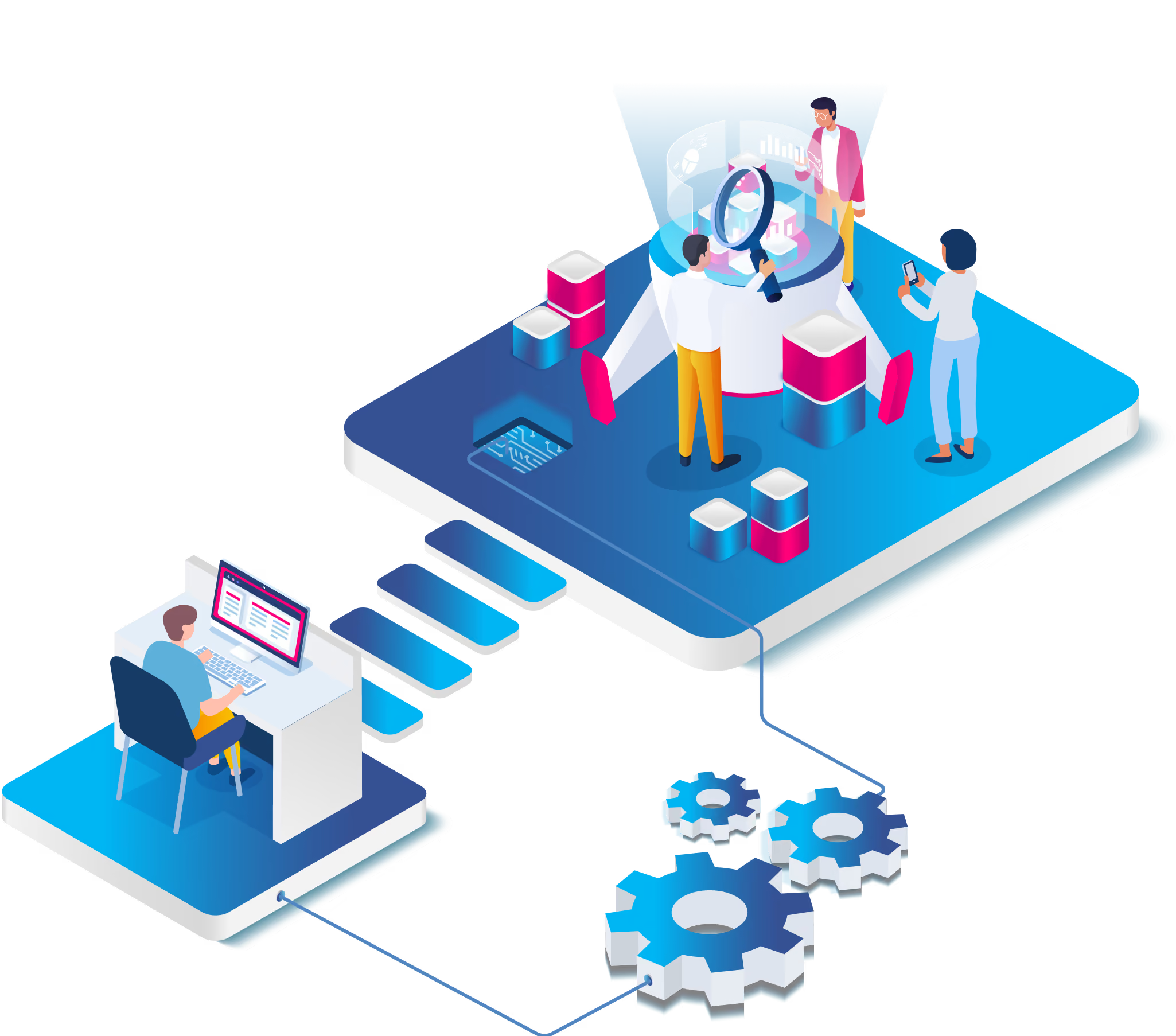

When leveraging EBSI, this opportunity transforms into a powerful catalyst for recognising and valuing individual achievements. It will allow life-long learners to ensure that their educational- and professional-gained skills, represented as micro-credentials, can be shared and recognised across borders and institutions. A team of education ministries and universities across Europe envision this project as a way to reshape the learning environment in Europe and demonstrate how learners can benefit from micro-credentials.
EBSI allows the Micro-credentials project to design, build, and operate the next generation of decentralised services. The objective of this project is to enhance the learner experience by allowing them to:
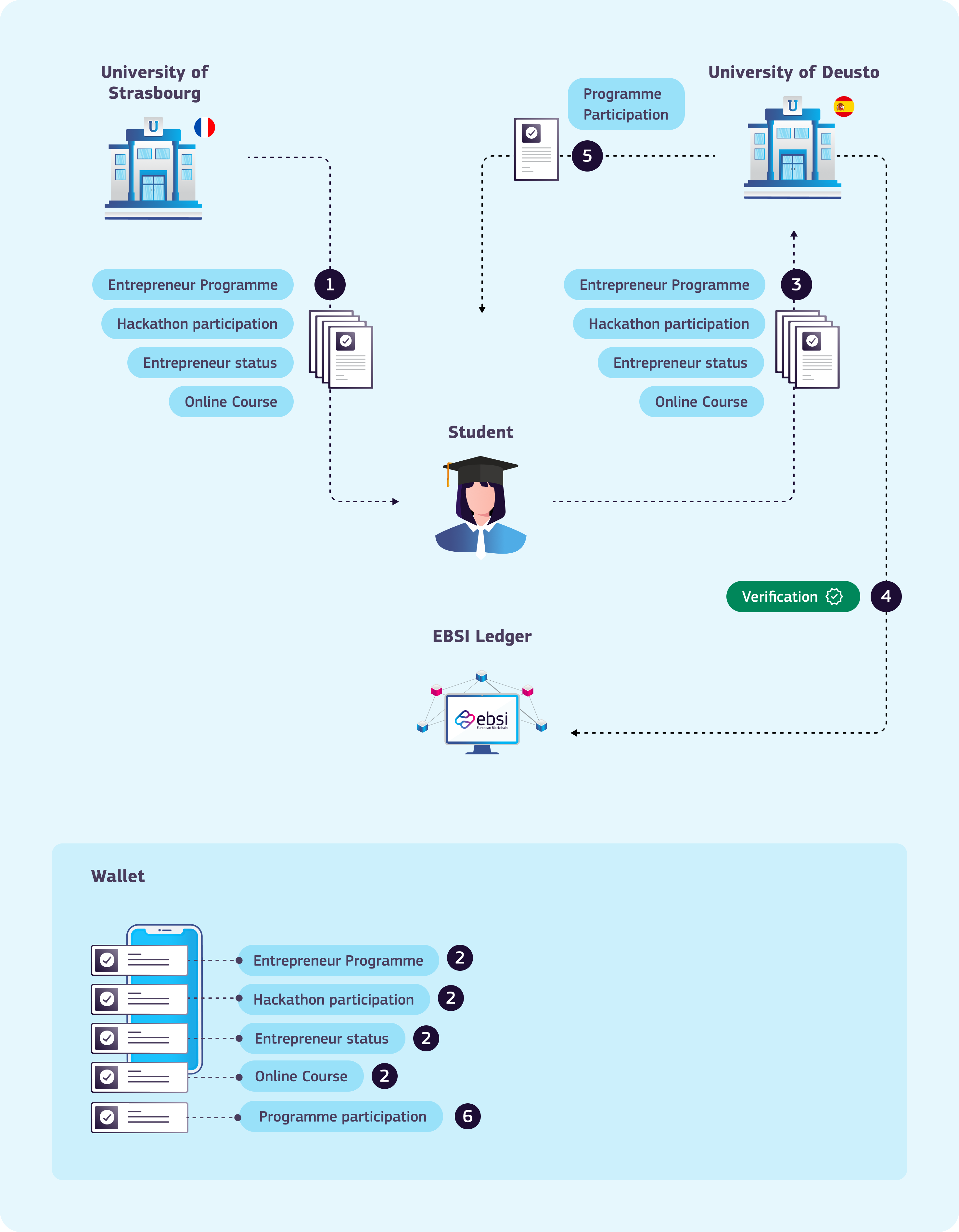
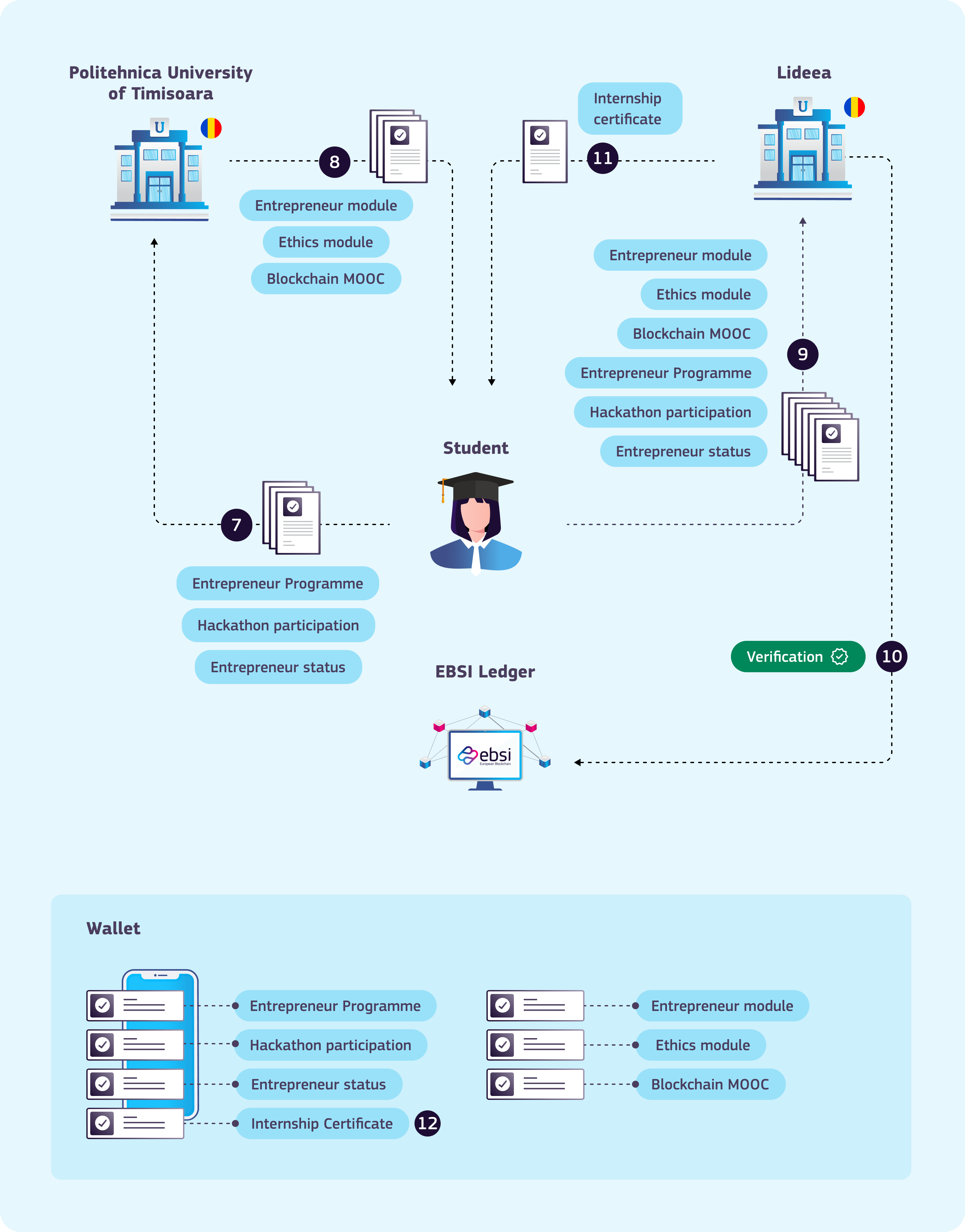
Eva, a student at the University of Strasbourg, is pursuing an entrepreneurship programme with the dream of either establishing her own startup or working as a C-level executive.
text
p
EBSI is open source under the European Public Licence. Evaluate the full stack locally, and connect to the live network when ready.
Lorem ipsum dolor sit amet, consectetur adipiscing elit, sed do eiusmod tempor incididunt ut labore et dolore magna aliqua. Ut enim ad minim veniam, quis nostrud exercitation ullamco laboris nisi ut aliquip ex ea commodo consequat. Duis aute irure dolor in reprehenderit in voluptate velit esse cillum dolore eu fugiat nulla pariatur.
Block quote
Ordered list
Unordered list
Bold text
Emphasis
Superscript
Subscript