Developer Hub
Open source. Run it locally, test conformance, connect when ready.
Explore Developer Hub


Helping enterprises, consumers, and EU economies at large address the counterfeiting of products by increasing supply chain transparency.



Together, the EBSI-ELSA project worked with the Netherlands customs authorities, Transport and Logistics Operators Jet Air Services and KLM Cargo, and brand owners Mercedes-Benz Tech Motion and Harman International, to address the pressing issue of counterfeiting in supply-chain management.
Lorem ipsum dolor sit amet, consectetur adipiscing elit, sed do eiusmod tempor incididunt ut labore et dolore magna aliqua. Ut enim ad minim veniam, quis nostrud exercitation ullamco laboris nisi ut aliquip ex ea commodo consequat. Duis aute irure dolor in reprehenderit in voluptate velit esse cillum dolore eu fugiat nulla pariatur.
Block quote
Ordered list
Unordered list
Bold text
Emphasis
Superscript
Subscript


Counterfeit and pirated goods accounted for 5.8% of EU imports in 2019, amounting to EUR 119 billion. The consequences extend beyond financial losses, posing risks to consumer health and undermining societal and economic frameworks. Various technologies have been deployed to combat counterfeiting, but criminal networks exploit the siloed nature of these systems.
To address counterfeiting, EU regulators have introduced unique product identifiers (UPIs) in sectors like pharmaceuticals and tobacco. Whilst UPIs address the challenge, their implementation does not currently extend beyond these two industries.


The European Blockchain Services Infrastructure (EBSI) allows the EBSI-ELSA project to design, build, and operate the next generation of decentralised supply-chain logistics services for the benefit of EU economies.
The EBSI-ELSA project aligns with the EU's digital policy and circular economy goals, aiming to develop traceability system capabilities by 2028 using the Digital Product Passport (DPP).
Within this context, EBSI is used as the trust model to issue and verify verifiable credentials, sign NFT metadata for authenticity, and to register information about supply chain events in the ledger. Additionally, the project uses Non-Fungible Tokens (NFTs) to represent digital twins of products, where IP rights holders are free to choose their preferred NFT platform and blockchain, ensuring market flexibility.
EBSI allows this project to project to build decentralised counterfeit prevention services with the objective to build an infrastructure designed to:
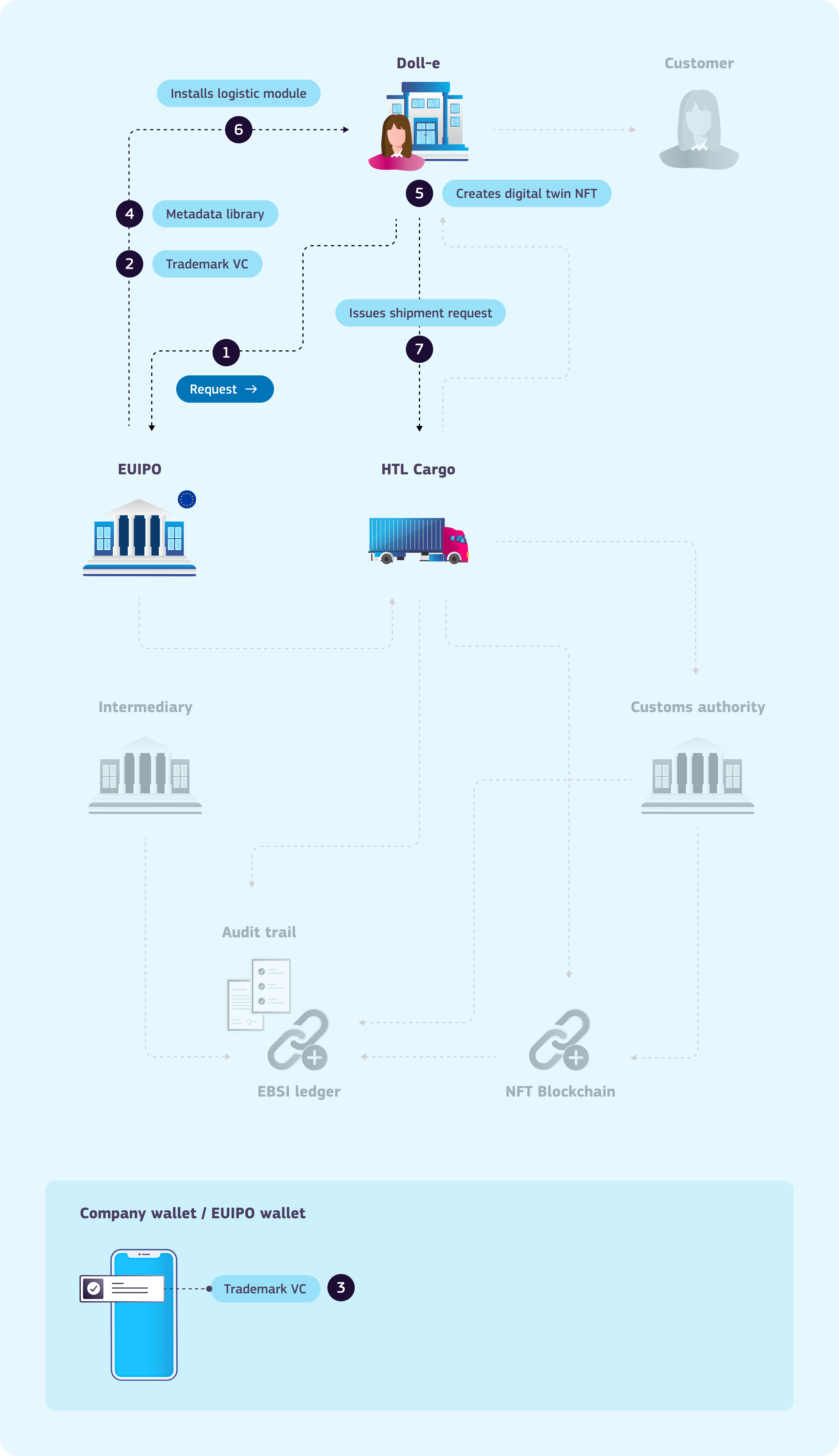
Virginia is a brand protection officer at Doll-e, a company that sells dolls for children. Doll-e handles its supply chain a little differently. The company creates digital twins of its products for authentication, guaranteeing transparency in the supply and logistic chain, and offering digital information to the end consumers about their favourite product (warranty, authenticity, loyalty program).
text
p
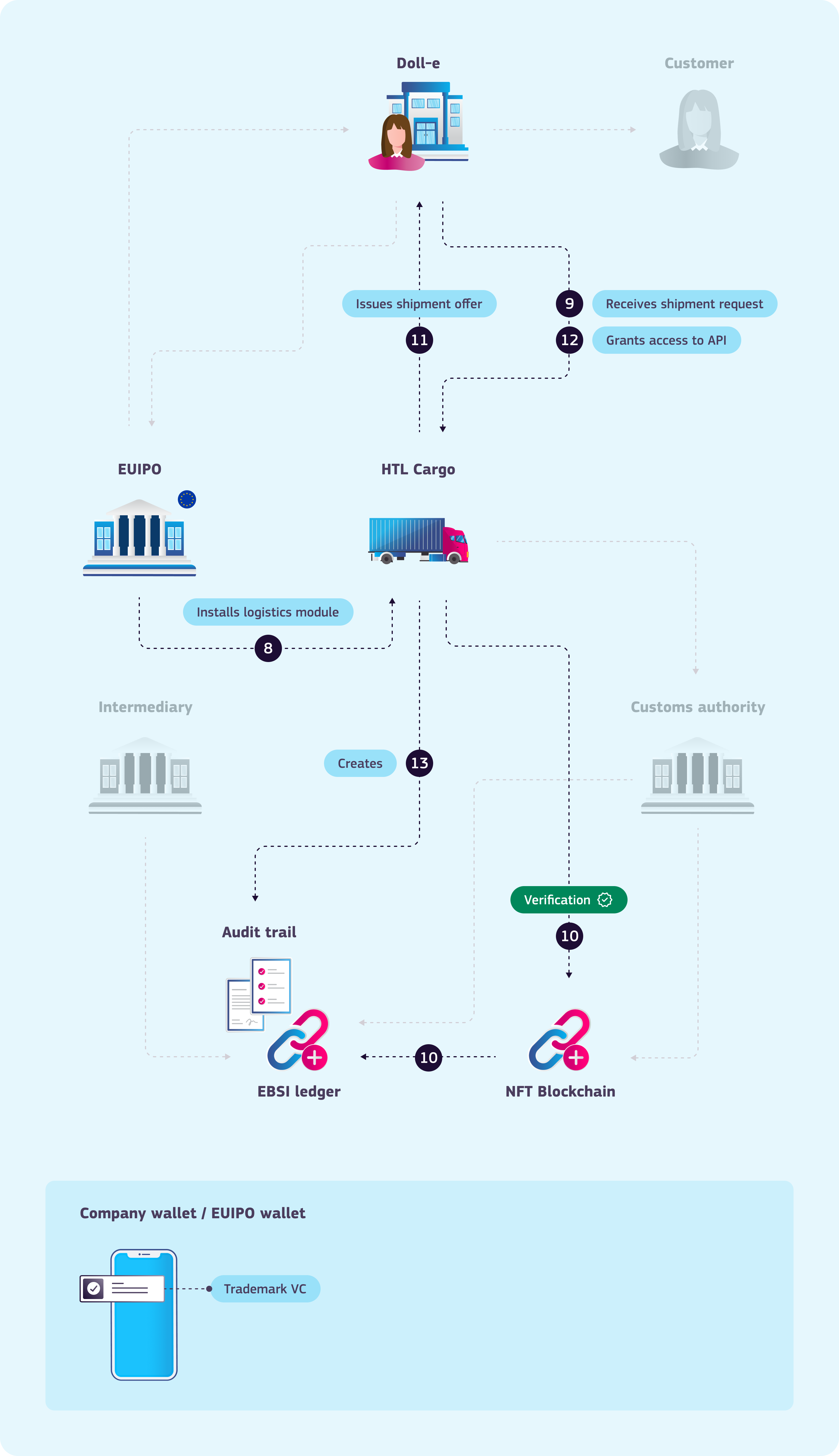
Jimmy is an operation process owner at HTL Cargo, a well known freight forwarder for import/export in the European Union. HTL Cargo wishes to further increase security and efficiency of operations by enabling transparency in the logistic chain between its clients, major brands, and law enforcement authorities.
text
p
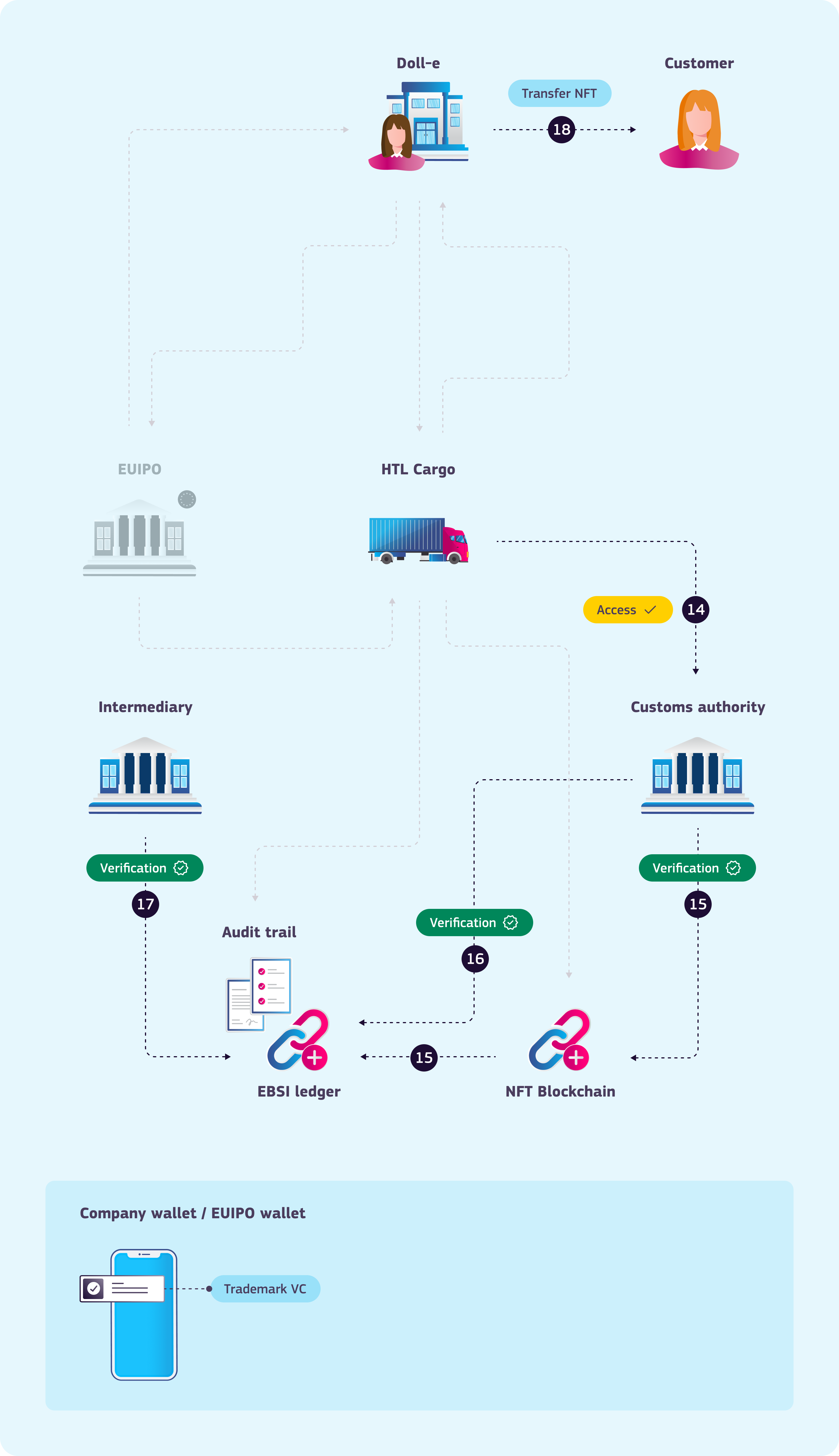
Frank is a customs officer in charge of pre-arrival assessment of products at an EU Member State customs authority. EU Customs Authorities wish to increase efficiency of movement of goods across international borders by having additional and trusted information on shipments and products.
text
p
EBSI is open source under the European Public Licence. Evaluate the full stack locally, and connect to the live network when ready.
Lorem ipsum dolor sit amet, consectetur adipiscing elit, sed do eiusmod tempor incididunt ut labore et dolore magna aliqua. Ut enim ad minim veniam, quis nostrud exercitation ullamco laboris nisi ut aliquip ex ea commodo consequat. Duis aute irure dolor in reprehenderit in voluptate velit esse cillum dolore eu fugiat nulla pariatur.
Block quote
Ordered list
Unordered list
Bold text
Emphasis
Superscript
Subscript